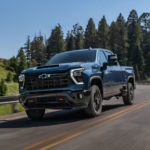

Introduction: A Midsize Pickup With Full-Size Attitude
Not everyone needs a massive pickup truck to handle demanding jobs, weekend adventures and everyday driving. Sometimes, the smartest choice is a vehicle that delivers serious pulling power without bringing the bulk of a full-size truck. That is precisely where the 2026 Chevrolet Colorado makes its case.
Chevrolet’s midsize pickup combines a muscular exterior, a powerful turbocharged engine and a technology-focused cabin in a package that feels equally suited to work and recreation. Whether you need a truck for transporting equipment, towing a recreational trailer or exploring unpaved roads, the Colorado offers a versatile mix of capability and convenience.
The 2026 model carries forward the modern design and mechanical foundation of the current-generation Colorado. Its 2.7-liter TurboMax four-cylinder engine produces 310 horsepower and 430 lb-ft of torque, giving it a strong performance profile for its class. Properly equipped versions can tow up to 7,700 pounds, making the truck attractive to buyers who need more than an ordinary daily driver.
For 2026, the lineup includes the WT, Custom, LT, Trail Boss, Z71 and ZR2. Each trim serves a different purpose, from straightforward commercial use to serious off-road driving.
So, is the 2026 Chevrolet Colorado worth buying? Let’s examine its design, performance, features, specifications, pricing and real-world practicality.
2026 Chevrolet Colorado: What’s New?
The 2026 Chevrolet Colorado is an evolutionary update rather than a complete redesign. Chevrolet has retained the established platform, powertrain and overall body shape while introducing selected changes to the trim lineup and available equipment.
The Custom trim adds a sportier appearance for buyers who want more visual character than the entry-level Work Truck. Chevrolet has also introduced the Stars & Steel special edition, while updated wheel choices and the White Sands exterior color add further variety.
The off-road-focused ZR2 remains one of the most distinctive versions of the Colorado. The available ZR2 Bison package pushes the truck further into specialized terrain with additional underbody protection and larger off-road tires.
These changes may not transform the driving experience, but they give buyers more ways to tailor the truck to their priorities.
Exterior Design: Tough, Modern and Purposeful
The 2026 Chevy Colorado has the proportions of a traditional pickup, with a tall front end, broad grille, squared-off bodywork and prominent wheel arches. Its styling draws visual inspiration from Chevrolet’s larger Silverado while preserving the more manageable dimensions of a midsize truck.
The front fascia gives the Colorado a confident road presence. Depending on the trim, the truck receives different wheel designs, exterior accents, lighting equipment and off-road details. The result is a lineup that ranges from understated work vehicle to aggressive trail machine.
The WT is the practical choice, with a straightforward appearance designed around utility. The Custom adds black exterior accents and gloss-black aluminum wheels, while the LT emphasizes everyday usability.
Trail Boss and Z71 models introduce more adventurous styling, all-terrain tires and other off-road-oriented equipment. The ZR2 takes a more specialized approach with a factory-installed suspension lift, wider fender flares and mud-terrain tires.
The ZR2 Bison goes further with dedicated off-road hardware and underbody protection for buyers who regularly encounter rocks, uneven trails and challenging terrain.
The cargo bed is another important part of the design. With useful tie-down points, available bed lighting and a practical tailgate layout, the Colorado supports everyday tasks such as moving tools, carrying supplies and transporting outdoor equipment.
Its exterior design is not merely about looking tough. It reflects the truck’s dual purpose as a practical working vehicle and an adventure-oriented pickup.
Engine and Performance: The TurboMax Advantage
Every 2026 Chevrolet Colorado uses a 2.7-liter TurboMax turbocharged inline-four gasoline engine. Rather than offering multiple engines across the range, Chevrolet has standardized the powertrain, simplifying the buying decision.
The engine produces:
- Maximum horsepower: 310 hp
- Maximum torque: 430 lb-ft
- Transmission: Eight-speed automatic
- Drivetrain: Rear-wheel drive or four-wheel drive, depending on trim
- Fuel type: Regular unleaded gasoline, minimum 87 octane
Those numbers are impressive for a midsize pickup powered by a four-cylinder engine. The substantial torque output is particularly useful when accelerating with cargo, climbing inclines or towing a trailer.
Turbocharging helps the engine deliver strong pulling power without requiring a larger-displacement V6 or V8. The eight-speed automatic transmission manages gear changes, aiming to balance responsiveness with relaxed cruising.
For city driving, the Colorado’s compact-for-a-pickup dimensions make it easier to maneuver than a full-size truck. On highways, its strong torque provides useful flexibility for overtaking and merging, although performance naturally depends on load, road conditions and drivetrain configuration.
The main trade-off is that the Colorado does not offer a diesel or V6 alternative. Buyers who specifically want the sound, character or power delivery of those engines will need to look elsewhere.
Nevertheless, the TurboMax powertrain gives the 2026 Colorado a compelling combination of output and everyday usability.
Towing Capacity: Ready for Work and Recreation
Towing capability is one of the strongest reasons to consider the 2026 Chevrolet Colorado.
Chevrolet advertises a maximum available towing capacity of 7,700 pounds when the truck is properly equipped. That figure makes the Colorado suitable for a broad range of applications, including compatible utility trailers, recreational boats, camping trailers and certain equipment-hauling tasks.
The available Advanced Trailering Package is relevant to buyers seeking the maximum published rating. Not every Colorado configuration can tow 7,700 pounds, so checking the exact vehicle’s rating is essential.
The truck’s 430 lb-ft of torque helps when pulling away from a stop or maintaining momentum on inclines. Trailer-related equipment and available monitoring technology can also make towing more manageable.
However, the maximum towing figure should never be the only number considered before attaching a trailer.
Buyers should check the following:
- Maximum trailering rating for the exact configuration
- Gross vehicle weight rating and gross combined weight rating
- Payload remaining after passengers and cargo are added
- Trailer tongue weight and hitch rating
- Brake requirements and trailer equipment compatibility
A trailer may fall below the maximum towing limit but still push the truck beyond its permitted payload. Safe towing depends on the complete combination of vehicle, cargo, trailer and hitch equipment.
For owners who need a midsize truck that can handle more than light-duty hauling, the Colorado’s advertised towing capacity is a major advantage.
Interior and Comfort: Practical Technology for Everyday Driving
The cabin of the 2026 Chevrolet Colorado blends modern technology with a functional layout. It is designed to serve drivers who may spend their weekdays traveling between job sites and their weekends heading toward campsites or outdoor destinations.
The dashboard features an 11.3-inch central touchscreen and an 11-inch digital driver information display. Together, these screens provide access to navigation, vehicle information, media and important driving data.
The center touchscreen uses Google built-in technology, while wireless Apple CarPlay and Android Auto compatibility help drivers connect compatible smartphones. The interface gives the Colorado a more contemporary feel than the simple, utilitarian cabins associated with older work trucks.
Chevrolet has also retained physical controls for commonly used functions, making it easier to adjust key settings without navigating multiple touchscreen menus.
Seat materials and interior appointments depend on the trim. The WT prioritizes practical equipment, while the LT and higher models offer additional convenience and appearance upgrades.
The front seats are designed for everyday comfort, and the rear seating area provides room for additional passengers. As with many midsize crew-cab pickups, taller rear passengers may find the space less generous than in a large SUV.
Cabin storage is useful for keeping smaller items organized, while available features such as wireless phone charging add convenience for daily use.
One compromise is that hard plastic surfaces remain prominent in parts of the cabin. That is understandable in a truck built for work and outdoor use, but buyers who prioritize luxury materials may prefer a more upscale competitor.
Overall, the Colorado’s interior strikes a sensible balance between digital convenience and work-ready practicality.
Infotainment and Connectivity Features
Technology is a major part of the 2026 Colorado’s appeal.
The standard 11.3-inch infotainment touchscreen provides a large interface for media and connected services. Google built-in functionality adds access to supported Google applications and voice-assisted features, subject to service availability and account requirements.
Wireless Apple CarPlay and Android Auto compatibility make it easier to use familiar smartphone applications without connecting a cable every time.
The 11-inch digital instrument cluster provides vehicle information in front of the driver. Depending on the configuration, available camera views and off-road performance displays can provide additional information about the truck’s surroundings and operating conditions.
These systems are useful in different situations. A contractor may appreciate the ability to access navigation between work sites, while an outdoor enthusiast may value the additional information when maneuvering on uneven terrain.
Connectivity features can depend on equipment, service plans, smartphone compatibility and geographic availability. Buyers should confirm which functions are supported in their market before purchasing.
Safety and Driver Assistance
The 2026 Chevrolet Colorado offers Chevrolet Safety Assist, a collection of driver-assistance technologies intended to support safer driving.
The package includes features such as:
- Automatic Emergency Braking
- Front Pedestrian Braking
- Forward Collision Alert
- Lane Keep Assist with Lane Departure Warning
- IntelliBeam automatic high-beam control
- Following Distance Indicator
These systems can help drivers identify potential hazards and respond to certain situations. They do not replace attentive driving or guarantee that a collision will be avoided.
Available camera systems can also help when reversing, maneuvering around obstacles or navigating tight spaces. Certain camera views may require additional equipment.
For off-road drivers, visibility and awareness become especially important when traveling on narrow trails or uneven ground. Nevertheless, drivers must continue to assess terrain, maintain safe speeds and avoid relying solely on electronic assistance.
Anyone purchasing the Colorado for family transportation or commercial use should review the final vehicle’s equipment list and safety documentation to understand which features are standard and which require additional options.
Off-Road Capability: From Trail Boss to ZR2 Bison
The Colorado’s range of off-road trims is one of its most appealing characteristics.
Chevrolet Colorado Trail Boss
The Trail Boss is designed for buyers who want enhanced ground clearance and off-road equipment without moving to the most specialized version.
It features a factory-installed two-inch lift, 32-inch all-terrain tires, selectable drive modes and a two-speed automatic transfer case. This combination makes it suitable for dirt roads, uneven tracks and moderate off-road adventures.
It is also a practical option for drivers who spend time on rural roads or need to reach work sites where the surface is not always paved.
Chevrolet Colorado Z71
The Z71 combines everyday comfort with additional off-road-oriented equipment. Its all-terrain tires, selectable drive modes and distinctive interior details give it a more adventurous character than the basic trims.
For buyers who divide their time between commuting, hauling and outdoor activities, the Z71 can be an attractive middle ground.
Chevrolet Colorado ZR2
The ZR2 is the dedicated high-performance off-road model.
Its three-inch factory lift, 33-inch mud-terrain tires and Multimatic DSSV dampers are designed to improve control over challenging terrain. The suspension hardware helps the truck manage uneven surfaces and maintain composure in demanding conditions.
The ZR2 also offers five selectable drive modes and specialized off-road displays. Its hardware is intended for drivers who regularly explore difficult trails rather than simply wanting an aggressive appearance.
One important trade-off is towing: the ZR2’s maximum rating is lower than the lineup’s headline figure, at up to 6,000 pounds.
Chevrolet Colorado ZR2 Bison
The ZR2 Bison is the most specialized off-road choice in the family. Developed with American Expedition Vehicles, it adds equipment intended for more demanding terrain.
Its highlights include 35-inch mud-terrain tires, approximately 12.2 inches of ground clearance and additional underbody protection using five boron-steel skid plates.
The Bison is particularly attractive to enthusiasts who regularly encounter rocky trails or want more factory-installed protection before considering aftermarket modifications.
Its specialized equipment makes it less of a universal choice, however. Buyers who rarely leave paved roads may get better value from a less expensive trim.
2026 Chevrolet Colorado Price and Trim Levels
The 2026 Chevrolet Colorado offers six principal trims, with different starting prices and equipment levels.
| Trim | Starting MSRP in the U.S. |
|---|---|
| WT | $32,400 |
| Custom | $33,545 |
| LT | $36,000 |
| Trail Boss | $40,500 |
| Z71 | $44,600 |
| ZR2 | $50,700 |
These are advertised starting prices and exclude destination freight charges, taxes, title, registration, dealer fees and optional equipment. Actual transaction prices may vary.
Which Colorado Trim Offers the Best Value?
The WT is the natural starting point for business owners and fleet buyers who need a practical pickup without unnecessary upgrades.
The Custom offers additional styling for a relatively modest increase over the base trim. It is worth considering for private buyers who want a more distinctive appearance.
The LT is a balanced choice for drivers who want everyday convenience alongside useful work capability. Its additional features make it an appealing option for mixed personal and professional use.
The Trail Boss is the better fit for buyers who frequently travel on rough roads and want factory-installed off-road equipment.
The Z71 provides a blend of comfort, appearance and trail-oriented capability. The ZR2, meanwhile, makes the most sense for serious off-road enthusiasts who will take advantage of its specialized suspension and tires.
The right choice depends on how the truck will be used. Paying extra for advanced off-road hardware is difficult to justify if the vehicle will spend nearly all its time on city streets.
Fuel Economy and Running Costs
Fuel economy is an important consideration when purchasing any pickup truck.
The 2026 Chevrolet Colorado’s gasoline turbo-four engine offers substantial performance, but drivers should not automatically expect small-car fuel consumption simply because it has four cylinders.
Published EPA estimates vary with drivetrain and trim. Rear-wheel-drive versions can achieve better fuel economy than some four-wheel-drive models, while the more specialized ZR2 and ZR2 Bison prioritize off-road capability over efficiency.
Real-world consumption depends on driving speed, traffic, tire choice, weather, payload and trailer weight. Frequent towing can increase fuel use significantly.
Maintenance costs also depend on operating conditions and service schedules. Commercial operators should consider tires, brakes, routine servicing and downtime when calculating the truck’s total cost of ownership.
For someone who mainly commutes and occasionally carries equipment, a less specialized trim may be the most economical choice. Drivers who regularly venture off-road should account for the cost of more aggressive tires and other equipment.
Cargo Bed and Everyday Practicality
The Colorado is built around a crew-cab layout with a short cargo bed, a configuration that prioritizes passenger space and general usability.
The bed is suitable for carrying tools, outdoor equipment, luggage and many everyday loads. Multiple tie-down points help secure cargo, while available lighting improves visibility after dark.
The StowFlex tailgate, available on the LT and higher trims, adds built-in storage and a useful intermediate tailgate position. This can help with organizing smaller items or supporting selected loading tasks.
A bed-mounted power outlet is available for compatible equipment, adding convenience for certain work and recreational applications.
The main limitation is configuration choice. Unlike some full-size pickups, the Colorado does not offer a broad range of cab and bed combinations. Buyers who routinely carry very long materials or need a larger cargo area should compare it with a full-size truck before making a decision.
Still, for people who want a pickup that is easier to maneuver than a full-size model, the Colorado’s combination of passenger seating and cargo utility is appealing.
2026 Chevrolet Colorado vs. Ford Ranger vs. Toyota Tacoma
The midsize pickup market includes strong competitors, particularly the Ford Ranger and Toyota Tacoma.
The Chevrolet Colorado distinguishes itself through its 310-horsepower TurboMax engine, 430 lb-ft of torque and maximum available towing rating of 7,700 pounds.
The Ford Ranger offers its own engine and equipment choices, while the Toyota Tacoma provides a broad range of powertrain and off-road configurations. Which truck performs best depends on the exact trims being compared.
| Category | Chevrolet Colorado | Ford Ranger | Toyota Tacoma |
|---|---|---|---|
| Vehicle class | Midsize pickup | Midsize pickup | Midsize pickup |
| Colorado engine output | 310 hp | Varies by engine | Varies by powertrain |
| Colorado maximum available towing | 7,700 lb | Configuration-dependent | Configuration-dependent |
| Off-road-focused options | Trail Boss, Z71, ZR2, ZR2 Bison | Tremor, Raptor and other packages, depending on market | TRD Off-Road, TRD Pro and other packages |
| Best reason to compare | Strong torque and towing | Engine variety and capability | Broad trim and powertrain selection |
For buyers focused on conventional towing and strong gasoline-engine torque, the Colorado deserves a place on the shortlist. Those who prioritize hybrid power, different cab configurations or a specific off-road package should evaluate the alternatives in detail.
The best truck is the one that meets your actual requirements without forcing you to pay for equipment you will rarely use.
Pros and Cons of the 2026 Chevrolet Colorado
Pros
- Strong 310-hp turbocharged four-cylinder engine
- 430 lb-ft of torque for everyday pulling power
- Maximum available towing capacity of 7,700 pounds
- Modern 11.3-inch infotainment touchscreen
- Standard digital driver information display
- Wireless Apple CarPlay and Android Auto compatibility
- Multiple trims for work, comfort and off-road use
- Highly capable ZR2 and ZR2 Bison variants
Cons
- No V6 or diesel engine option
- Only one main cab-and-bed configuration
- Some cabin surfaces feel less premium than those in certain competitors
- Fuel economy can decline substantially under heavy loads
- The ZR2 sacrifices some towing capacity for off-road hardware
- Optional equipment can increase the final purchase price considerably
Is the 2026 Chevrolet Colorado Worth Buying?
The 2026 Chevrolet Colorado is a compelling choice for buyers who need a midsize pickup with substantial torque, useful towing capacity and a modern cabin.
Its TurboMax engine provides the strength required for a variety of work and recreational tasks, while the available off-road trims allow buyers to select a truck suited to their preferred terrain. The technology package also makes the Colorado feel contemporary enough for daily commuting and longer journeys.
The WT makes sense for straightforward commercial duties. The Custom appeals to buyers who want extra styling, while the LT provides a strong everyday balance. The Trail Boss and Z71 suit owners who regularly encounter rough roads, and the ZR2 Bison targets enthusiasts seeking serious off-road equipment.
There are compromises. The interior could be more upscale, the cab-and-bed choices are limited, and buyers who need the absolute highest towing rating must select the correct configuration.
Even so, the Colorado offers a convincing combination of capability and manageable dimensions. It is large enough to do meaningful work but smaller than a full-size pickup, which can be an advantage in crowded parking areas and urban environments.
For buyers who value torque, practical towing performance and the option of serious off-road hardware, the 2026 Chevrolet Colorado is well worth considering.
Frequently Asked Questions
1. How much does the 2026 Chevrolet Colorado cost?
The advertised U.S. starting MSRP is $32,400 for the WT, excluding destination charges, taxes, fees and optional equipment. Higher trims cost more depending on configuration.
2. What engine does the 2026 Chevy Colorado use?
Every 2026 Colorado uses a 2.7-liter TurboMax turbocharged inline-four gasoline engine producing 310 horsepower and 430 lb-ft of torque.
3. What is the maximum towing capacity of the 2026 Colorado?
The maximum available towing capacity is 7,700 pounds with the appropriate configuration and equipment. The ZR2 has a lower maximum rating of up to 6,000 pounds.
4. Is the 2026 Chevrolet Colorado good for off-roading?
Yes. The Trail Boss, Z71 and ZR2 offer varying levels of off-road equipment. The ZR2 Bison is the most specialized choice for challenging terrain.
5. Does the 2026 Colorado have Apple CarPlay?
Yes. The truck supports wireless Apple CarPlay and Android Auto, alongside an 11.3-inch touchscreen and Google built-in technology.
6. Is the 2026 Chevrolet Colorado fuel-efficient?
Fuel economy depends on drivetrain, trim, driving conditions and load. Some rear-wheel-drive versions are more efficient than off-road-focused four-wheel-drive models, and towing can increase consumption significantly.
7. Which 2026 Colorado trim is best for daily driving?
The LT is a strong option for buyers who want a practical combination of comfort, technology and utility. The best trim depends on the features and driving conditions that matter most to the owner.
8. Is the Colorado better than the Silverado?
Neither is universally better. The Colorado is a midsize truck that is easier to maneuver, while the full-size Silverado offers a broader range of larger-truck capabilities and configurations. Buyers should select the vehicle that fits their towing, payload and space requirements.
Final Verdict: A Smart Balance of Strength and Versatility
The 2026 Chevrolet Colorado demonstrates that a midsize pickup does not have to compromise heavily on performance. Its 310-hp TurboMax engine, 430 lb-ft of torque and maximum available 7,700-pound towing capacity make it a capable partner for work and leisure.
Its strongest advantage is versatility. Buyers can choose a basic work truck, a comfortable daily driver or a specialized off-road model without moving to a full-size pickup.
The cabin technology, practical cargo bed and selection of off-road equipment strengthen its appeal. Although interior materials and configuration choices leave room for improvement, the Colorado remains a well-rounded option for drivers who want a capable truck without unnecessary bulk.
Overall verdict: The 2026 Chevrolet Colorado is a strong midsize pickup for buyers who prioritize torque, towing capability, everyday practicality and off-road versatility.
Share this content: