
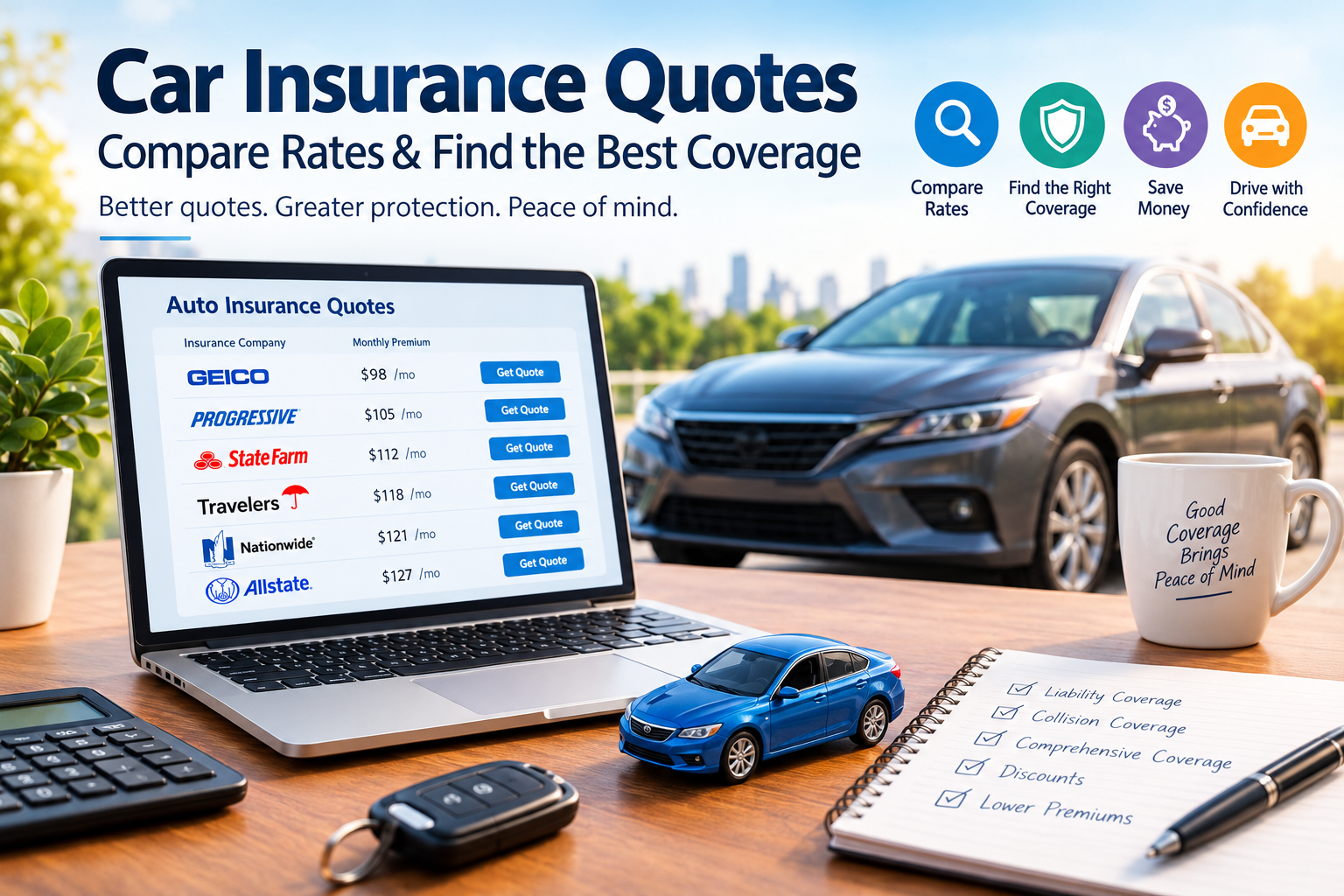
Shopping for car insurance can feel overwhelming when every company advertises competitive prices, attractive discounts, and convenient coverage options. The challenge is figuring out which policy offers the right protection at a price that fits your budget.
Getting multiple car insurance quotes is one of the most practical ways to make that decision. A quote gives you an estimated premium based on information such as your location, driving history, vehicle, age, and selected coverage. Comparing offers helps you understand what different insurers charge for similar protection.
Whether you’re buying your first vehicle, renewing an existing policy, or looking for a better deal, this guide explains how to compare auto insurance rates, identify reputable companies, and make a more informed decision.
What Are Car Insurance Quotes?
Car insurance quotes are estimates of how much an insurance company may charge to insure your vehicle for a specific period. Depending on the insurer, you may receive a quote online, over the phone, or through an independent insurance agent.
Your estimated premium depends on several factors. These commonly include your driving record, ZIP code, vehicle model, annual mileage, coverage limits, deductible, and insurance history. Some states also permit insurers to consider additional rating factors, subject to state law.
A quote is not always a final offer. The insurer may verify your information and adjust the price before issuing the policy.
For the most useful comparison, request quotes using the same coverage limits, deductible amounts, and policy details. Otherwise, a lower price could simply reflect less protection.
How to Get Car Insurance Quotes Online
Finding auto insurance online is usually straightforward. You can visit individual insurance company websites or use a comparison service to explore available options.
Follow these steps to get started.
1. Gather Your Information
Prepare your driver’s license details, vehicle identification number (VIN), vehicle registration information, address, estimated annual mileage, and details about other household drivers if requested.
You should also know whether your vehicle is financed or leased, because your lender may require collision and comprehensive coverage.
2. Decide What Coverage You Need
Before comparing prices, determine which coverage types and limits make sense for your circumstances. State-minimum liability insurance may satisfy the legal requirement in your state, but it may not provide enough financial protection after a serious accident.
Consider liability coverage, collision coverage, comprehensive coverage, and uninsured or underinsured motorist protection where available and appropriate.
3. Request Multiple Quotes
Compare offers from at least three to five insurers. Include large national providers and reputable regional companies operating in your state.
You can begin with GEICO, Progressive, State Farm, Travelers, Nationwide, and other available providers. Drivers who qualify for USAA membership may want to request a quote there as well.
4. Compare the Complete Policy
Look beyond the advertised premium. Review coverage limits, deductibles, exclusions, optional benefits, payment fees, and any restrictions that could affect a future claim.
For example, a policy with a lower monthly payment may require a much larger deductible after an accident.
5. Review Discounts and Finalize Your Choice
Ask about discounts for safe driving, multiple vehicles, bundling home or renters insurance, qualifying vehicle safety features, and eligible driver training.
Discount availability varies by insurer and state. Confirm the actual premium and policy terms before purchasing.
Best Car Insurance Companies to Compare in the USA
There is no single insurance company that offers the best deal to every driver. One provider might offer a competitive price to a homeowner with a clean driving record, while another may be a better fit for a young driver, a household with multiple vehicles, or someone who needs specialized coverage.
The following companies are useful starting points when shopping for car insurance quotes.
GEICO
GEICO is worth comparing if you’re looking for competitive auto insurance pricing and a largely digital insurance experience. Drivers can explore policy options, request quotes, and manage many insurance tasks online.
Best for: Drivers seeking competitive pricing and online convenience.
Official website: https://www.geico.com/
Progressive
Progressive offers several auto insurance coverage options, including optional protections and programs designed around driving behavior. Its online comparison tools can help shoppers evaluate their options.
Best for: Drivers who want flexible coverage choices and additional policy features.
Official website: https://www.progressive.com/
State Farm
State Farm combines online services with a large agent network. Some drivers prefer working with a local agent who can explain coverage limits, policy changes, and claims procedures.
Best for: Drivers who value access to local insurance agents.
Official website: https://www.statefarm.com/
Travelers
Travelers is another established insurer worth including in a comparison. Its auto insurance offerings and optional coverage features may appeal to drivers looking for more than a basic liability policy.
Best for: Drivers comparing established providers and broader coverage options.
Official website: https://www.travelers.com/
Nationwide
Nationwide provides auto insurance and offers eligible customers opportunities to explore discounts and policy features. Availability and eligibility depend on location and individual circumstances.
Best for: Drivers interested in comparing discounts and potential policy bundles.
Official website: https://www.nationwide.com/
Allstate
Allstate is worth considering if you want to compare coverage options, discounts, and services through both digital channels and agents.
Best for: Drivers who want to evaluate a range of insurance options and service arrangements.
Official website: https://www.allstate.com/
USAA
USAA provides insurance services to eligible military members, veterans, and qualifying family members. If you meet its membership requirements, obtaining a quote can help you determine whether its coverage and pricing suit your needs.
Best for: Eligible military-affiliated drivers and families.
Official website: https://www.usaa.com/
Remember that these are companies to compare, not a universal ranking. Independent 2026 insurance comparisons have placed Travelers, GEICO, and Nationwide among the leading national providers, although results depend on the publication’s methodology and the driver profile being evaluated.
What Is the Average Cost of Car Insurance in the USA?
There is no universal price for car insurance. Premiums vary considerably according to the driver, state, vehicle, selected coverage, and insurance company.
For example, a driver purchasing state-minimum liability coverage may receive a very different quote from someone insuring a newer vehicle with higher liability limits, collision coverage, and comprehensive protection.
When reviewing published averages, check whether the figures represent minimum coverage or full coverage, which states were included, and whether the data reflects actual policies or modeled driver profiles.
Rather than relying on a national average alone, use it as background information and compare personalized quotes for your own ZIP code.
What Factors Affect Your Car Insurance Quotes?
Understanding the main pricing factors can help you identify ways to reduce your premium.
Driving History
Accidents, traffic violations, and certain serious driving offenses can increase premiums. Maintaining a clean driving record may help you qualify for more competitive rates over time.
Age and Driving Experience
Younger and less-experienced drivers often pay higher premiums because insurers generally consider them a higher-risk group. Rates can change as drivers gain experience, although the effect varies.
Location
Your ZIP code can influence pricing because insurers assess factors such as traffic density, theft, accident frequency, repair expenses, and local claim patterns.
Vehicle Type
The vehicle’s value, repair costs, safety features, theft risk, and performance characteristics may affect its insurance price.
Coverage Limits and Deductibles
Higher coverage limits generally cost more, while choosing a higher deductible may reduce the premium for coverage such as collision and comprehensive. However, you should select a deductible you could realistically afford after a claim.
Credit-Based Insurance Scores
In some states, insurers may use credit-based insurance scores when determining premiums. Rules differ by state, and some states restrict or prohibit this practice.
Annual Mileage and Vehicle Use
A driver who travels long distances or regularly commutes in heavy traffic may receive a different quote from someone who drives only occasionally. Insurers use different methods to assess mileage and driving habits.
Liability-Only vs. Full Coverage Car Insurance
Choosing the appropriate level of protection is just as important as finding a low premium.
Liability coverage generally pays for covered injuries or property damage you cause to others, up to your policy limits. It does not normally pay to repair your own vehicle after an at-fault accident.
Full coverage is an informal term commonly used for a policy that combines liability insurance with collision and comprehensive coverage. It is not a standardized insurance product, so always check exactly what the policy includes.
Collision coverage generally helps pay for covered damage to your vehicle following a collision, subject to the policy terms and deductible. Comprehensive coverage generally addresses covered non-collision losses, such as theft, hail, fire, or falling objects.
If you have a car loan or lease, your lender may require collision and comprehensive coverage. Even if your vehicle is paid off, consider its value and whether you could afford to repair or replace it yourself.
How to Find Cheap Car Insurance Quotes Without Sacrificing Protection
A low premium is useful only when the policy provides suitable protection. These practical steps can help you look for savings.
- Compare at least three to five insurers using identical coverage limits and deductibles.
- Ask about safe-driver, multi-car, bundling, and other discounts for which you may qualify.
- Consider a higher deductible only if you can afford the potential out-of-pocket cost.
- Review your annual mileage and vehicle use to make sure the information on your policy is accurate.
- Explore telematics or usage-based insurance programs if their terms suit your driving habits and privacy preferences.
- Review your policy at renewal and after major life changes.
- Check regional insurers and independent agents instead of limiting your search to national brands.
- Avoid reducing liability limits solely to obtain a lower advertised premium.
You can also ask your current insurer to review available discounts. However, do not assume that renewing with the same company will automatically produce the lowest price.
Why You Should Compare Quotes Before Buying
Insurance companies use different underwriting rules and pricing models. As a result, two insurers can offer different premiums for similar coverage.
Comparing multiple quotes gives you a clearer picture of the available market. It also helps you spot differences in deductibles, optional benefits, exclusions, and service arrangements.
Before purchasing a policy, review the insurer’s financial strength information, complaint history, claims process, and customer service reputation. Your state insurance department and the National Association of Insurance Commissioners (NAIC) can provide useful consumer information.
A policy should offer a sensible balance of price, coverage, and service—not simply the smallest number on the quote.
Frequently Asked Questions About Car Insurance Quotes
How many car insurance quotes should I get?
Start with three to five quotes from different insurers. Consider requesting additional quotes if the prices differ substantially or you have special coverage needs.
Can I get car insurance quotes without paying?
Yes. Most insurers allow you to request a quote without purchasing a policy or paying a premium. However, some comparison services may request contact information or connect you with agents.
Does checking car insurance quotes affect my credit score?
Requesting an insurance quote generally does not affect your credit score in the same way as applying for a new loan. In states where credit-based insurance information is permitted, insurers may use specialized inquiries or insurance scores under applicable rules.
What is the cheapest car insurance company?
There is no cheapest company for every driver. GEICO, Progressive, Travelers, USAA for eligible members, and regional insurers are reasonable starting points for comparisons. Your individual results will depend on your location, driving record, vehicle, and coverage choices.
Is minimum car insurance enough?
State-minimum coverage may satisfy your state’s legal requirements, but the required limits may not be sufficient to cover the full cost of a serious accident. Consider your assets, financial circumstances, and potential liability before selecting limits.
When should I compare car insurance rates again?
Review your rates at renewal and whenever your circumstances change significantly, such as moving, buying another vehicle, adding a driver, or changing your annual mileage. You can also shop around periodically to see whether another insurer offers better value.
Final Thoughts
Finding affordable car insurance starts with understanding your needs and comparing policies carefully. The best car insurance quotes are not necessarily the cheapest ones; they are the offers that provide appropriate protection at a competitive price.
Start by gathering your driver and vehicle information, deciding on suitable coverage limits, and requesting quotes from several insurers. Compare the complete policy, investigate available discounts, and confirm the final price before you buy.
A little research today can help you make a more confident insurance decision and avoid paying for a policy that does not meet your needs.
Share this content: