
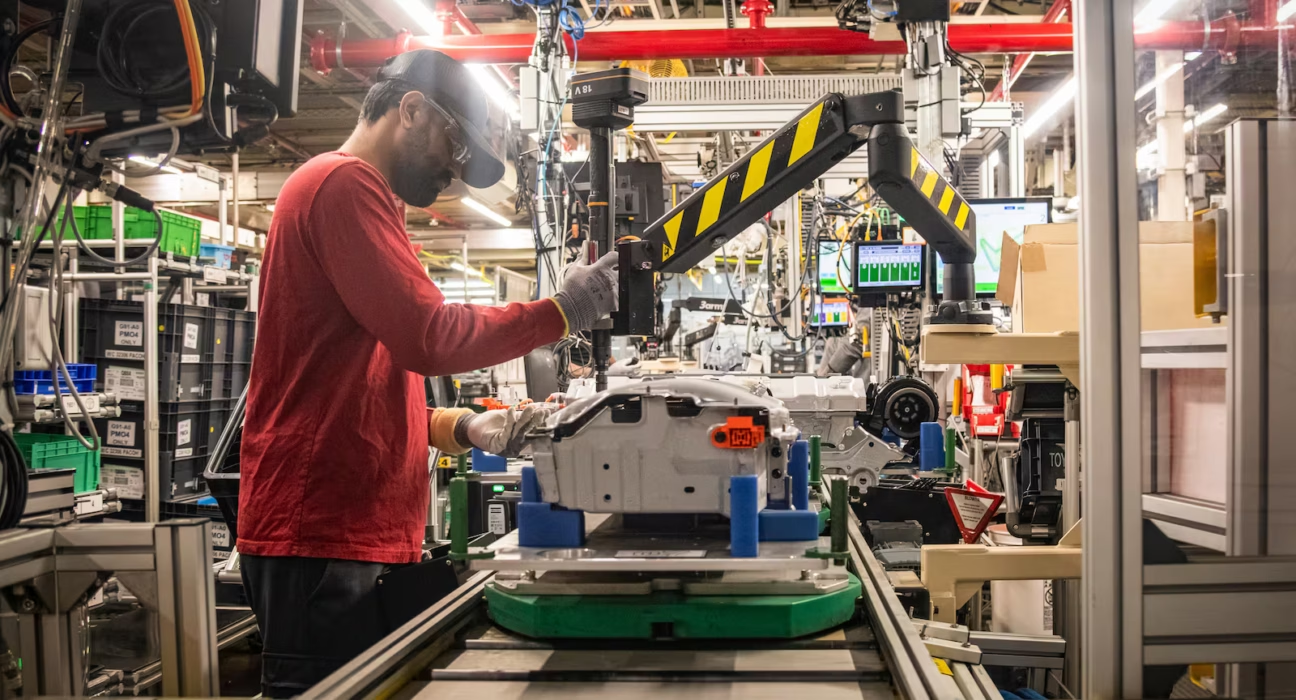
Toyota Motor is working to contain the growing financial pressure from U.S. import tariffs while waiting for greater clarity on potential trade relief. The Japanese automotive giant is pursuing supplier negotiations, reviewing parts procurement and adjusting its manufacturing and sourcing strategies to reduce the impact of higher import costs on its global business.
Despite the uncertainty, Toyota has shown resilience in its latest financial results. The company recently raised its full-year operating profit forecast, supported by stronger hybrid vehicle demand, improved cost management and a lower expected tariff burden.
However, the financial challenge remains substantial. Toyota still expects U.S. tariffs to affect its annual operating income by approximately 1.1 trillion yen, demonstrating how trade policies continue to influence the economics of the world’s largest automaker.
Toyota Seeks Ways to Reduce Its U.S. Tariff Burden
The latest developments highlight Toyota’s efforts to manage tariffs rather than simply absorb the additional expenses.
During its November 2026 financial update, Toyota explained that it had reviewed its procurement arrangements and held discussions with suppliers to identify opportunities to reduce tariff-related costs.
The company is exploring several approaches, including negotiating potential refunds for affected parts, finding alternative components and reviewing the countries from which it sources automotive supplies.
These measures are particularly important because modern vehicles depend on complex international supply chains. Components may cross multiple borders before reaching an assembly facility, exposing manufacturers to additional duties and unexpected expenses.
Toyota is also examining sourcing arrangements involving the United States, Canada, Mexico and Japan to identify opportunities to reduce its exposure to import tariffs.
The company has already incorporated some of these mitigation efforts into its financial outlook, although further savings will depend on negotiations, trade rules and the availability of alternative suppliers.
U.S. Tariffs Continue to Pressure Toyota’s Profitability
American trade policies have created a difficult operating environment for international automakers with manufacturing and supply networks spread across multiple countries.
Toyota is particularly exposed because it sells millions of vehicles in the United States while relying on production facilities and suppliers throughout North America and Asia.
Import duties can increase the cost of finished vehicles as well as the components required to manufacture them. Automakers must then decide whether to absorb those expenses, negotiate lower prices with suppliers or pass some of the additional costs to customers.
For Toyota, transferring the entire burden to consumers could weaken its pricing competitiveness in an already competitive market.
The company has therefore focused on controlling expenses while maintaining attractive vehicle prices and protecting demand.
Toyota’s latest financial projections estimate that tariffs will reduce its full-year operating income by approximately 1.1 trillion yen. Although the figure remains significant, the company has reduced its expected exposure through procurement adjustments and other cost-saving measures.
Supplier Negotiations Become a Key Part of Toyota’s Strategy
One of Toyota’s most important approaches involves working more closely with suppliers.
Rather than treating tariffs exclusively as a manufacturing expense, the automaker is examining how costs are distributed throughout its supply network.
According to comments made during its latest earnings discussions, Toyota has negotiated with suppliers over affected parts, including arrangements that could allow certain suppliers to seek refunds for tariff-related expenses.
In some situations, alternative components may also provide opportunities to reduce costs.
This strategy could help Toyota limit the financial impact without immediately making significant changes to vehicle prices.
However, supplier negotiations are complicated. Automotive components must meet strict safety, quality and performance requirements, meaning manufacturers cannot simply replace existing parts without careful testing and approval.
Any major sourcing adjustment must also preserve production stability and prevent disruptions at assembly facilities.
Consequently, Toyota’s cost-reduction strategy is likely to involve a combination of supplier agreements, purchasing improvements and longer-term manufacturing adjustments.
Toyota Raises Its Annual Profit Forecast Despite Tariff Pressure
Despite the ongoing trade challenges, Toyota delivered a stronger financial outlook in November.
The company increased its full-year operating profit forecast to 3.9 trillion yen, representing a 500 billion yen improvement over its previous projection.
Several factors contributed to the upgraded outlook, including stronger vehicle demand in North America, favorable currency movements, improved sales performance and cost-reduction initiatives.
Toyota’s hybrid vehicle lineup has also supported its business as American consumers continue to show interest in fuel-efficient vehicles.
The automaker has benefited from demand for models that combine gasoline engines with electric motors, offering improved efficiency without requiring drivers to depend entirely on charging infrastructure.
North America has also returned to profitability, supported by pricing adjustments and a reduction in the expected tariff impact.
Nevertheless, Toyota has not suggested that the financial pressure has disappeared. Its revised forecast still includes a substantial tariff expense, alongside higher material costs and other operational challenges.
North America Remains Central to Toyota’s Manufacturing Plans
The United States is one of Toyota’s most important automotive markets, making the region central to its response to changing trade policies.
The company has continued expanding its American manufacturing presence to strengthen local production and reduce its dependence on imported vehicles and components.
Producing more vehicles closer to their final customers could help Toyota manage future tariff exposure while improving supply-chain flexibility.
However, increasing domestic production requires significant capital investment, workforce planning and coordination with suppliers.
Toyota must also balance its American operations with manufacturing facilities in Canada and Mexico, both of which play important roles in its North American supply network.
The upcoming review of the United States-Mexico-Canada Agreement adds another layer of uncertainty. Changes to regional trade rules could influence where automakers manufacture vehicles, source components and allocate future investments.
For Toyota, maintaining competitive access to all three markets is important for long-term manufacturing efficiency.
Hybrid Demand Provides Another Financial Advantage
While tariffs remain a major concern, Toyota’s hybrid vehicle business is helping strengthen its competitive position.
The company has developed a broad range of hybrid models across its Toyota and Lexus brands, giving it an advantage among customers looking for fuel-efficient vehicles without making a complete transition to battery-electric technology.
Strong hybrid demand has helped support sales in North America, where consumers continue to consider fuel economy, vehicle affordability and everyday convenience when purchasing new cars.
Toyota’s approach also provides some protection against uncertainty surrounding the pace of electric vehicle adoption.
Rather than relying exclusively on fully electric vehicles, the company continues to offer conventional hybrids, plug-in hybrids, battery-electric vehicles and other electrified technologies.
This diversified strategy allows Toyota to respond to different customer preferences while maintaining a broad product portfolio.
The strength of its hybrid business could become increasingly important as the automaker looks for additional ways to offset tariff expenses and protect operating margins.
What Happens Next for Toyota?
Toyota’s ability to reduce its tariff burden will depend on several factors, including future U.S. trade decisions, supplier negotiations and changes to its manufacturing operations.
Potential tariff refunds and adjustments to sourcing arrangements could provide additional financial relief. However, the company must also prepare for the possibility that significant trade-related expenses will continue.
The automaker faces another challenge in balancing cost reductions with product competitiveness. Cutting expenses too aggressively could affect supplier relationships, manufacturing quality or production efficiency.
Toyota will therefore need to maintain a careful approach as it works through the changing trade environment.
For investors, the company’s improved profit forecast offers a positive indication that management is finding ways to manage external pressures. For consumers, the bigger question is whether Toyota can continue controlling vehicle prices while absorbing higher manufacturing and import costs.
Toyota is demonstrating that managing tariffs requires more than waiting for government decisions. The automaker is actively reviewing its supply chain, negotiating with suppliers and exploring opportunities to reduce expenses across its international manufacturing network.
Its upgraded operating profit forecast provides some reassurance, but the estimated 1.1 trillion yen annual tariff impact remains a substantial financial burden.
As trade negotiations and U.S. automotive policies continue to evolve, Toyota’s ability to control costs without sacrificing competitiveness will be critical.
The company’s next challenge is turning its current cost-saving measures into sustainable financial improvements while maintaining its strong position in the American automotive market.
Share this content: