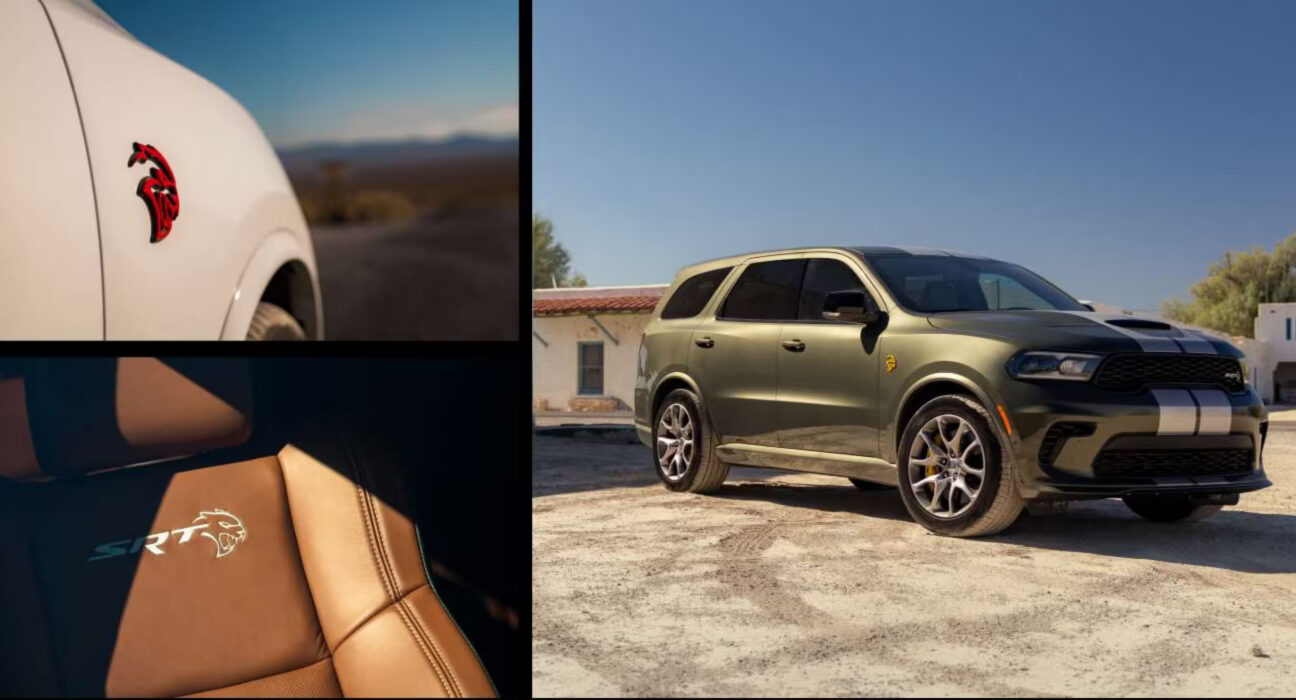
The 2027 Dodge Durango is a three-row SUV with an attitude that sets it apart from the typical family vehicle. While many modern SUVs focus on fuel savings, hybrid technology and quiet electric power, the Durango continues to embrace the traditional American performance formula: large V8 engines, muscular styling, all-wheel drive and serious towing capability.
For 2027, Dodge continues its V8-focused strategy, offering three distinct engine options across the Durango range. Buyers can choose the 5.7-liter HEMI V8, step up to the 6.4-liter HEMI V8 in the R/T 392, or select the supercharged 6.2-liter HEMI V8 in the SRT Hellcat. This lineup gives the Durango an unusual position in the SUV market, especially for drivers who want substantial power without sacrificing three-row versatility.
The latest model year also brings expanded customization options, additional equipment packages and the striking Redeye exterior color. Rather than reinventing the Durango from the ground up, Dodge continues to refine a familiar formula that appeals to performance enthusiasts and families who need a powerful, practical vehicle.
But is the 2027 Dodge Durango worth its price? How much power does each engine deliver? Is the Hellcat worth the extra money, and how does the Durango compare with other three-row SUVs?
This detailed review explores the 2027 Dodge Durango price, specifications, performance, exterior design, interior comfort, safety technology, fuel economy and overall ownership value.
2027 Dodge Durango: Key Highlights
- Three gasoline V8 engine options across the lineup.
- Maximum output of 710 horsepower in the SRT Hellcat.
- Standard all-wheel drive across the principal 2027 retail lineup.
- Three-row seating with configurations for up to seven passengers.
- Eight-speed automatic transmission.
- Maximum towing capacity of up to 8,700 pounds when properly equipped.
- Performance-oriented R/T 392 and SRT Hellcat versions.
- New Redeye exterior paint option for 2027.
- Available premium audio, leather seating and advanced driver-assistance features.
The Durango’s main attraction is its combination of everyday utility and old-school V8 performance. Few mainstream three-row SUVs offer a supercharged engine with this level of output.
2027 Dodge Durango Price: How Much Does It Cost?
The 2027 Dodge Durango covers a wide price range, from the relatively accessible GT HEMI to the high-performance SRT Hellcat Jailbreak. The more expensive models add substantial engine power, upgraded chassis equipment and additional personalization options.
The following figures represent announced U.S. starting prices, including the destination charge where specified.
| 2027 Dodge Durango trim | Starting MSRP |
|---|---|
| GT HEMI | $45,670 |
| GT Plus HEMI | $49,270 |
| GT Premium HEMI | $52,270 |
| R/T 392 | $52,990 |
| R/T 392 Plus | $56,590 |
| R/T 392 Premium | $59,590 |
| SRT Hellcat | $82,490 |
| SRT Hellcat Jailbreak | $83,485 |
These prices exclude applicable taxes, registration, dealer fees and optional equipment. Final transaction prices may vary by dealership and configuration.
Which Durango offers the best value?
The GT HEMI is the natural starting point for buyers who want V8 power, three-row practicality and standard all-wheel drive without paying for the most expensive performance hardware.
The R/T 392 is more appealing to drivers who want a meaningful increase in engine output and a more performance-oriented driving experience. Its 475-horsepower engine gives it a strong position between the mainstream GT and the extreme Hellcat.
The SRT Hellcat is a different proposition altogether. Its supercharged engine transforms the Durango into a high-performance SUV, but its higher purchase price and substantial fuel requirements make it a specialist choice rather than the obvious option for every family.
International buyers should calculate shipping, import duties, taxes, insurance and registration before comparing these prices with the final cost in their home market.
Engine and Performance Specifications
The 2027 Dodge Durango lineup offers three different levels of V8 performance. Although all three engines share the traditional eight-cylinder layout, their power delivery and intended roles differ considerably.
1. Dodge Durango GT HEMI: 5.7-liter V8
The GT HEMI provides the entry point into the 2027 Durango’s V8-powered lineup. Its 5.7-liter HEMI V8 produces a claimed 360 horsepower and 390 lb-ft of torque.
This engine offers a useful balance between everyday drivability and the strong acceleration expected from a large American SUV. The naturally aspirated V8 delivers power without the additional complexity of a supercharger, making it the more straightforward choice for drivers who want a traditional gasoline powertrain.
An eight-speed automatic transmission manages engine output, while standard all-wheel drive helps the SUV put its power down in different road conditions.
Dodge quotes a zero-to-60-mph time of approximately 6.2 seconds for the GT HEMI. That is respectable for a three-row SUV, particularly one designed to carry passengers and luggage rather than focus exclusively on acceleration.
For most owners, the GT HEMI should provide enough power for highway merging, overtaking and regular family travel. It also offers the lower entry price of the V8 range.
2. Dodge Durango R/T 392: 6.4-liter V8
The R/T 392 takes the Durango into more serious performance territory with a 6.4-liter HEMI V8.
Its advertised output reaches 475 horsepower and 470 lb-ft of torque. That additional power gives the SUV stronger acceleration and makes it a more compelling choice for drivers who regularly tow heavy loads or simply want a more powerful vehicle.
Key specifications include:
- Engine: 6.4-liter HEMI V8
- Maximum horsepower: 475 hp
- Maximum torque: 470 lb-ft
- Transmission: Eight-speed automatic
- Drivetrain: All-wheel drive
- Claimed zero-to-60-mph time: Approximately 4.4 seconds
The R/T 392 is designed to offer more than a larger engine. Its performance-focused equipment can include adaptive suspension dampers, upgraded Brembo braking hardware and revised steering characteristics, depending on the configuration.
These additions matter because a heavy SUV needs more than horsepower to feel composed. Effective braking, controlled body movement and predictable traction are important when accelerating quickly or carrying passengers at highway speeds.
For buyers who want an exciting driving experience without moving into the Hellcat’s price bracket, the R/T 392 is arguably the most balanced performance choice in the lineup.
3. Dodge Durango SRT Hellcat: Supercharged 6.2-liter V8
The SRT Hellcat is the most extreme version of the 2027 Durango. Its supercharged 6.2-liter HEMI V8 produces an extraordinary 710 horsepower and 645 lb-ft of torque.
That level of output places the Durango in a very different category from ordinary family SUVs. It can deliver sports-car-like acceleration despite its substantial size and three-row body.
The published specifications include:
- Engine: Supercharged 6.2-liter HEMI V8
- Maximum horsepower: 710 hp
- Maximum torque: 645 lb-ft
- Transmission: Eight-speed automatic
- Drivetrain: All-wheel drive
- Claimed zero-to-60-mph time: Approximately 3.5 seconds
Actual acceleration varies with tires, road surface, weather and test conditions. Nevertheless, the Hellcat’s performance credentials are remarkable for a vehicle with the space and towing capability of a full-size family SUV.
The supercharged engine produces strong acceleration across a broad range of speeds. The accompanying chassis and braking upgrades are intended to help the vehicle manage that output, although its size and weight still demand respect from the driver.
The Hellcat is best suited to enthusiasts who genuinely want extraordinary performance from an SUV and are prepared for the associated fuel, tire, insurance and maintenance costs.
4. Durango SRT Hellcat Jailbreak
The Jailbreak version builds on the Hellcat’s mechanical foundation while placing greater emphasis on personalization.
It allows buyers to explore additional combinations of exterior colors, interior finishes, wheels, stripes, badges and other styling details. For customers who want a vehicle that looks distinctive rather than resembling a standard showroom configuration, this flexibility is an important attraction.
The core engine specification remains the supercharged 6.2-liter V8, producing 710 horsepower and 645 lb-ft of torque.
The Jailbreak package is therefore primarily about individual expression and equipment choices rather than a dramatic increase in engine output. Buyers should compare its additional cost with the specific customization options they actually want.
2027 Dodge Durango Full Specifications
| Specification | GT HEMI | R/T 392 | SRT Hellcat |
|---|---|---|---|
| Engine | 5.7L HEMI V8 | 6.4L HEMI V8 | 6.2L supercharged HEMI V8 |
| Maximum horsepower | 360 hp | 475 hp | 710 hp |
| Maximum torque | 390 lb-ft | 470 lb-ft | 645 lb-ft |
| Transmission | 8-speed automatic | 8-speed automatic | 8-speed automatic |
| Drivetrain | AWD | AWD | AWD |
| Seating | Up to 7 | Up to 7, configuration dependent | Up to 7, configuration dependent |
| Approximate 0–60 mph | 6.2 seconds | 4.4 seconds | 3.5 seconds |
| Maximum towing capacity | Configuration dependent | Up to 8,700 lb when properly equipped | Up to 8,700 lb when properly equipped |
All figures are manufacturer or published specification figures and may vary by equipment, test conditions and market. Maximum towing capacity requires the appropriate configuration and equipment.
Exterior Design: Muscular Styling With a Purpose
The 2027 Dodge Durango retains the bold styling that has helped distinguish it from more conservative family SUVs. Its broad front end, sculpted body panels and strong proportions communicate performance even before the engine starts.
The front fascia gives the SUV a substantial appearance, while the high beltline and pronounced wheel arches reinforce its muscular stance. Depending on trim, wheel designs, exterior accents and badging can make the vehicle appear either relatively understated or aggressively sporty.
The Hellcat versions add a more performance-focused visual identity. Their appearance is supported by the mechanical hardware underneath, rather than being limited to cosmetic changes.
New Redeye exterior color
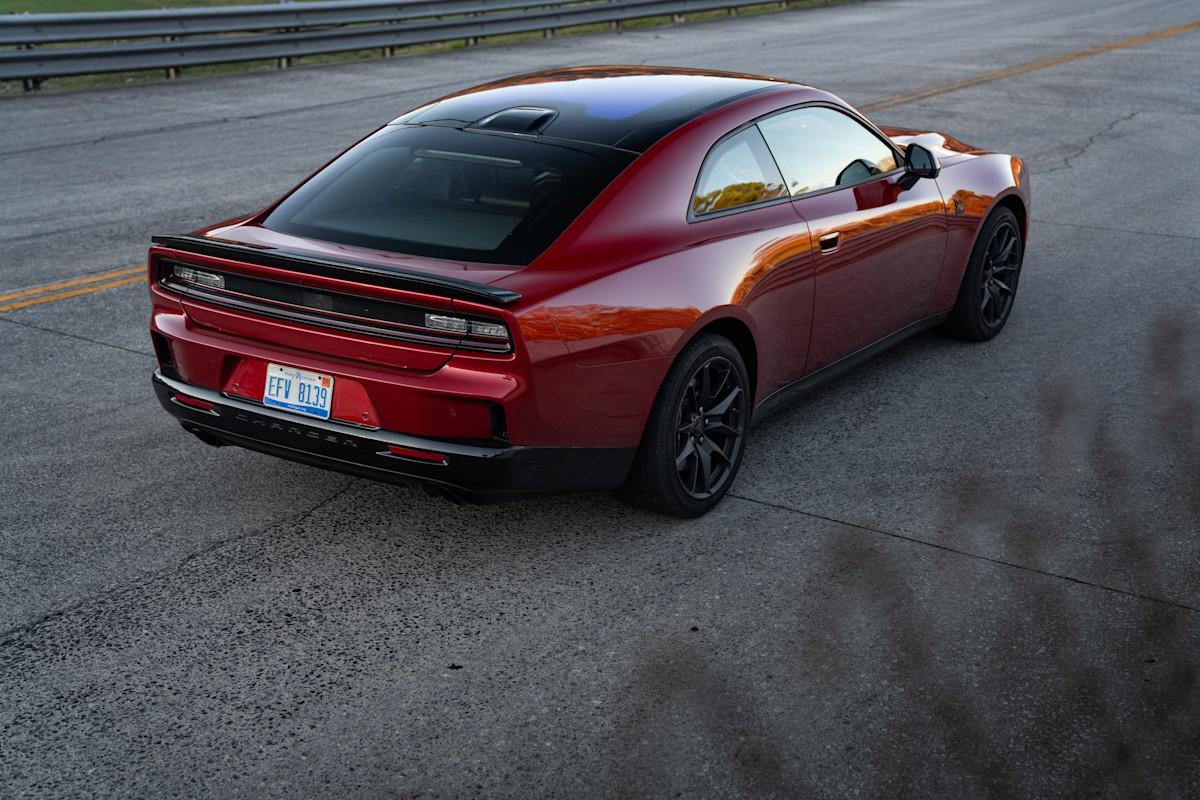
One of the notable 2027 updates is the availability of Redeye, a vivid crimson exterior finish previously associated with the Charger. Dodge has expanded the color across the HEMI-powered Durango range.
Other available colors include B5 Blue, Destroyer Grey, Green Machine, Night Moves, Pitch Black, Red Oxide and White Knuckle. Availability and pricing depend on trim and configuration.
For buyers who like the Durango’s traditional styling but want something more individual, the expanded color palette offers a simple way to make the SUV stand out.
The overall design, however, remains an evolution of the existing Durango rather than a completely new-generation vehicle. Shoppers looking for an entirely redesigned platform or radically different body proportions may find the updates conservative.
Interior and Cabin Comfort
Inside, the 2027 Dodge Durango focuses on a practical cabin with a performance-inspired character. The dashboard, center console and seating layout are designed to serve both everyday family duties and the needs of drivers who appreciate a more engaging vehicle.
The cabin can accommodate up to seven occupants, depending on the selected seating arrangement. Buyers can also choose second-row captain’s chairs on applicable configurations, reducing seating capacity to six while creating easier access to the third row.
Seating and passenger space
The front seats provide the primary comfort zone for the driver and front passenger, while the second row offers space for additional adults or children. The third row increases flexibility for larger families, although it is best to assess rear-seat comfort in person if adults will use it frequently.
Folding the rear seats creates additional cargo room for luggage, sports equipment and other larger items. This versatility is useful when the Durango needs to switch between passenger transport and carrying bulky goods.
Available interior features
Depending on trim and package, buyers can find features such as:
- Leather or premium leather-faced seating.
- Heated and ventilated front seats.
- Heated second-row seats.
- Power-adjustable front passenger seating.
- Driver memory settings.
- A power sunroof.
- Premium Harman Kardon audio equipment.
- Upgraded interior trim and stitching.
- A power-adjustable steering column on selected models.
Higher trim levels provide a more upscale atmosphere, while performance versions place additional emphasis on distinctive materials and sports-oriented details.
The important point is that equipment differs across the range. Buyers should confirm whether a particular vehicle includes the desired comfort and convenience features before ordering.
Infotainment and Connectivity
The Durango’s technology package supports the everyday tasks expected from a modern SUV. Depending on specification, the infotainment system provides access to smartphone integration, media, navigation and vehicle settings.
The available audio upgrades are particularly appealing to drivers who spend significant time on the road. A premium sound system can make long journeys more enjoyable, while additional connectivity features help passengers stay connected.
However, the Durango’s cabin technology is not its primary selling point. Its strongest appeal remains the combination of V8 performance, practical passenger space and towing capability.
Drivers who prioritize the newest digital interfaces, the largest available screens or cutting-edge electric-vehicle software may want to compare the Durango with newer competitors before making a decision.
Driving Experience: Family SUV or Performance Machine?
The Durango’s driving character changes significantly with the engine choice.
The GT HEMI is the most sensible everyday configuration. It has enough power for normal driving and provides a traditional V8 experience without the extreme output of the higher trims.
The R/T 392 is more engaging when acceleration matters. Its stronger engine and performance-oriented chassis equipment make it better suited to drivers who want a genuinely quick SUV.
The Hellcat sits at the opposite end of the spectrum. Its supercharged engine provides explosive acceleration, and the standard all-wheel-drive system helps translate that power into forward movement.
Despite these differences, all versions remain substantial SUVs. Their size affects braking distances, cornering behavior and maneuverability. The most powerful model should not be mistaken for a lightweight sports car simply because its acceleration figures are impressive.
A test drive is particularly important for buyers who have never owned a high-powered SUV. It helps establish whether the steering response, ride comfort, seating position and overall dimensions suit their daily routine.
Towing Capability and Utility
Towing is one of the Durango’s strongest practical advantages. Properly equipped versions can tow up to 8,700 pounds, although the maximum rating depends on the engine, equipment and configuration.
That capacity can make the Durango suitable for hauling recreational trailers, boats and other compatible loads. It also gives the SUV a practical role beyond commuting and family travel.
The 5.7-liter GT HEMI provides a useful foundation for drivers who need conventional towing capability. The 6.4-liter R/T 392 combines higher engine output with strong towing potential, while the Hellcat offers an unusual blend of supercharged performance and substantial rated capacity.
However, the maximum towing figure should never be treated as a universal rating for every Durango. Trailer weight, passengers, luggage, tongue weight and installed equipment all affect what a particular vehicle can safely tow.
Owners should consult the vehicle-specific towing guide and ensure that the trailer, hitch, tires and braking system comply with the manufacturer’s limits.
Fuel Economy and Ownership Costs
The biggest drawback of a V8-powered SUV is the cost of operating it. The Durango delivers substantial power, but buyers should not expect the fuel economy of a smaller crossover or hybrid SUV.
The 5.7-liter HEMI is the most reasonable starting point for owners who want V8 character without moving to a larger or supercharged engine. Even so, fuel consumption will depend on traffic, driving style, vehicle load and the frequency of short trips.
The 6.4-liter R/T 392 prioritizes performance, while the supercharged Hellcat demands even more attention to fuel costs. Frequent hard acceleration can make the difference particularly noticeable.
Maintenance and replacement expenses also deserve consideration. Performance tires, larger brakes and specialized components can cost more than the equivalent parts on an ordinary family SUV. Insurance premiums may also be higher for the most powerful versions.
| Ownership factor | GT HEMI | R/T 392 | SRT Hellcat |
|---|---|---|---|
| Engine output | Strong | Very strong | Extreme |
| Fuel-cost expectations | High relative to smaller SUVs | Higher under performance driving | Potentially very high |
| Performance equipment | Mainstream SUV focus | Upgraded performance hardware | High-performance hardware |
| Best use | Family duties and towing | Family use with stronger performance | Enthusiast-focused performance |
| Purchase budget | Lowest of these three | Mid-range | Highest |
Official fuel-economy figures should be checked for the precise trim. Published ratings may differ by model, equipment and testing method, so a single mileage figure should not be assumed to apply to the entire lineup.
Safety and Driver Assistance
The 2027 Durango offers safety and driver-assistance equipment that varies by trim and package. Available features can include adaptive cruise control, forward-collision warning, automatic emergency braking, blind-spot monitoring, lane-departure assistance and parking-related technologies.
Higher trims may include additional equipment intended to improve driver awareness and convenience during longer journeys.
These systems can provide useful support, but they do not remove the need for attentive driving. A heavy SUV carrying passengers or towing a trailer still requires appropriate following distances, careful braking and responsible speed selection.
Buyers should verify the precise safety equipment included with their chosen vehicle and review independent crash-test results where available.
2027 Dodge Durango vs. Its Main Rivals
The Durango occupies an unusual position because it combines three-row utility with a full range of V8 engines. Several competing SUVs offer similar practicality, but their priorities differ.
Ford Explorer
The Ford Explorer is a strong alternative for families who want a three-row SUV with modern technology and a range of powertrain options. Depending on trim, it can provide a more efficiency-oriented ownership proposition than the V8-powered Durango.
The Dodge is more appealing to buyers who specifically want the character and output of a traditional V8 engine.
Jeep Grand Cherokee
The Jeep Grand Cherokee is worth considering for buyers who want a comfortable SUV with a more adventure-oriented image. Its available configurations emphasize a different balance of road comfort, off-road capability and passenger practicality.
The Durango’s three-row layout and powerful V8 lineup make it a more natural choice for shoppers who prioritize family capacity and muscle-SUV performance.
Chevrolet Traverse
The Chevrolet Traverse focuses on family space, everyday comfort and practical passenger accommodation. It is a sensible alternative for buyers whose main priorities are carrying passengers and managing routine family travel.
The Durango stands apart through its V8 engines and high-performance Hellcat version. Buyers should decide whether those performance benefits justify the additional fuel and ownership costs.
Pros and Cons of the 2027 Dodge Durango
What makes it appealing?
Powerful V8 lineup: Buyers can choose from 360 hp, 475 hp and 710 hp configurations.
Exceptional performance potential: The Hellcat provides acceleration that is unusual for a large three-row SUV.
Useful towing capability: Properly equipped versions can tow up to 8,700 pounds.
Flexible seating: Available configurations accommodate up to seven occupants.
Distinctive styling: The Durango’s muscular exterior separates it from more conventional family SUVs.
Customization options: New colors and equipment packages give buyers more ways to personalize their vehicle.
What could be better?
Fuel consumption: The V8 lineup is less attractive to drivers who prioritize minimizing fuel costs.
Aging design: The vehicle retains an established platform and overall design rather than introducing a completely new generation.
High Hellcat pricing: The most powerful versions cost considerably more than mainstream family SUVs.
Large dimensions: Parking and maneuvering in narrow urban environments can be challenging.
Feature availability varies: Some desirable comfort and safety technologies require higher trims or additional packages.
Is the 2027 Dodge Durango Worth Buying?
The 2027 Dodge Durango makes the most sense for buyers who want a practical SUV but are unwilling to give up the traditional V8 experience.
The GT HEMI is the logical choice for families who want strong performance, three-row seating and useful towing capability at the lowest entry price in the V8 lineup.
The R/T 392 is better suited to drivers who enjoy spirited acceleration and want additional performance hardware without paying Hellcat money. Its 475-horsepower engine gives it an appealing middle position between everyday usability and enthusiast performance.
The SRT Hellcat is for a much narrower audience. Its 710-horsepower engine delivers extraordinary performance, but the purchase price and operating costs mean that buyers should choose it because they genuinely want that experience—not simply because it sits at the top of the range.
For families who mainly need economical transportation, a hybrid or smaller SUV may be a more sensible choice. For drivers who value engine character, towing capacity and acceleration, the Durango offers a combination that is increasingly uncommon.
Final Verdict: A Muscle SUV With a Distinct Personality
The 2027 Dodge Durango continues to stand apart by combining the usefulness of a three-row SUV with the character of a traditional American V8 vehicle. Its bold styling, standard all-wheel drive and range of engine choices make it more than a conventional family hauler.
The GT HEMI provides a strong entry point, the R/T 392 delivers a more serious performance experience, and the SRT Hellcat pushes the formula into extreme territory with 710 horsepower.
The biggest compromises are fuel consumption, purchase price at the upper end of the range and a design that has evolved rather than been completely reinvented. Buyers who prioritize modern hybrid technology or maximum efficiency will find alternatives that better suit those goals.
For enthusiasts who want a spacious SUV with genuine muscle-car character, however, the Durango remains a compelling option. The R/T 392 is the strongest all-round performance choice, while the GT HEMI is the more sensible everyday purchase. The Hellcat is the model for buyers who want maximum power and are prepared to pay for it.
Ultimately, the 2027 Durango’s appeal comes from its refusal to follow the usual SUV formula. It offers family practicality, towing capability and unmistakable V8 performance in a package that still feels distinctly Dodge.
Share this content: